
Alcohol and Your Midlife Body
Could it be time to rethink that cheeky glass of wine?
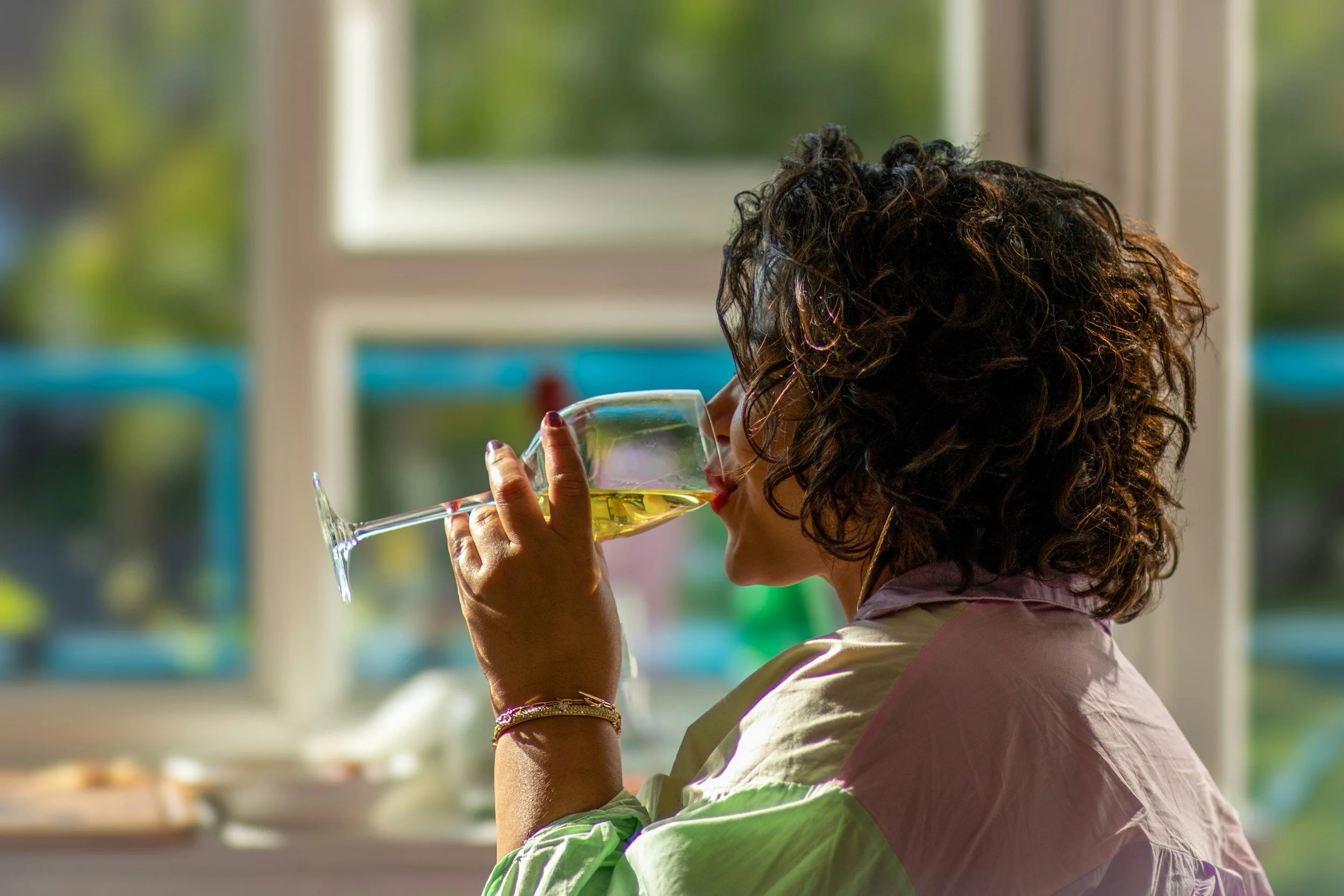
I want to start by saying something clearly: this post is not about whether you should drink. That is your decision, and yours alone.
What I do want to offer is an honest, non-judgmental look at what alcohol is actually doing inside the body at this particular stage of life. Because the conversation around alcohol tends to live at two unhelpful extremes: either it's completely normalized (wine o'clock and rosé all day) or it veers into the territory of moralizing and shame.
Neither of those serves you.
I stopped drinking on March 9, 2025 and since then I’ve only noticed positive changes to my sleep, my gut, my skin, and my mood. I used to walk down the wine aisle of the supermarket and have to convince myself not to reach for a bottle, especially on Friday nights. Now not even my old favorites feel tempting, regardless of the day of the week.
Most of us know alcohol isn't doing us any favors, but a lot of midlife women don't know to what extent it does harm. Let’s get clear on why alcohol hits differently after 40 and go through each of the effects one by one.
Why Things Don’t Feel Like They Used To
If you've noticed that you feel the effects of alcohol more quickly than you used to, or that the recovery takes longer, you are not imagining it.
Several things change in midlife that alter how the body processes alcohol:
Body composition shifts as estrogen declines. Less muscle mass and more fat tissue means less water in the body to dilute alcohol, so blood alcohol concentration rises faster from the same amount.
Liver enzyme activity changes with age, slowing the rate at which alcohol is metabolized.
Declining estrogen affects the brain's sensitivity to alcohol's sedative effects, which is part of why that first glass can feel more potent than it once did.
The result: the same two glasses of wine that felt manageable at 35 can hit significantly harder at 48.
What Alcohol Does to Your Cortisol
Alcohol may feel like it reduces your stress in the moment, but that short term relief comes at a cost. Shortly after drinking, the activity in your brain's threat-detection center (the amygdala) gets dialled down, leaving you with that familiar sense of calm.
But within a few hours, cortisol levels start to rise and the rebound effect kicks in. This is one reason why drinking can help you wind down after a long day on the one hand, but make you wake up at 2 in the morning with low-grade anxiety on the other.
For midlife women who are chronically stressed, alcohol adds another round of activation to a nervous system that is already struggling to come down.
What Alcohol Does to Your Blood Sugar
Alcohol and blood sugar have a complicated relationship. Depending on what you're drinking and when, alcohol can both spike and crash blood sugar, all within the same evening.
Sugary mixers and wine cause an initial glucose spike, followed by an insulin response. But alcohol also inhibits the liver's ability to release stored glucose, which can cause blood sugar to drop unexpectedly overnight. This is part of why alcohol-disrupted sleep often comes with night sweats, heart pounding, and that wired-but-exhausted feeling the next morning.
For women who are already navigating insulin resistance or blood sugar instability, alcohol amplifies the dysregulation that's already present.
What Alcohol Does to Your Gut
The gut takes a significant hit from regular alcohol consumption, including at moderate levels.
Alcohol increases intestinal permeability, a condition sometimes called "leaky gut," where the tight junctions between gut cells loosen and allow partially digested food particles and bacteria to pass into the bloodstream. This triggers an immune response and systemic inflammation which can lead to bloating, digestive discomfort, and low-grade inflammation.
Alcohol also disrupts the gut microbiome directly, reducing the diversity of beneficial bacteria and creating conditions that favor less helpful strains. Since the gut microbiome plays a central role in mood, immune function, and metabolic health, this disruption has effects that extend well beyond digestion.
What Alcohol Does to Your Sleep
Alcohol is often used as a sleep aid, and as someone who has fallen asleep in more bars than I can count, I can attest to its effectiveness in this regard. The problem is it’s only helpful in the beginning, and robs you of the restorative sleep you need in the end.
That’s because alcohol suppresses REM sleep, the deeper stage where emotional processing, memory consolidation, and hormonal regulation happen. As a result, you wake feeling unrefreshed, cognitively foggy, and often more anxious than the night before. This might lead you to reach for another glass of wine to take the edge off the next day, which perpetuates the cycle even more.
What Alcohol Does to Your Libido
Alcohol has a reputation for lowering inhibitions and making intimacy feel more accessible. You might have noticed yourself how a drink or two can quiet the inner critic, ease self-consciousness, and create a sense of openness that isn’t normally there.
But the relationship between alcohol and libido gets complicated in midlife. By this point, I’m guessing you’re not surprised.
Alcohol is a depressant, which means it suppresses the central nervous system, including the nerve pathways responsible for sexual sensation and arousal. Even as it lowers inhibition, it simultaneously reduces physical sensitivity, which is why alcohol-influenced intimacy can feel emotionally easier but physically less satisfying.
Over time, regular drinking also suppresses testosterone, the hormone most directly linked to sexual desire in women. Since it’s already taking a dip in perimenopause, alcohol accelerates this natural decline.
The result is a quiet paradox: the thing that feels like it's helping you relax into intimacy may be gradually eroding the biological foundations of desire.
Going Beyond Biology
It's worth naming that alcohol is woven into how many of us socialize, celebrate, and wind down together. Deciding to drink differently (or not at all) can feel socially complicated in ways that have nothing to do with willpower or biology. In fact, once the initial cravings subside, it’s the social aspect that tends to challenge us most.
Getting clear on your own reasons for stopping (or cutting down on) drinking is the first step. Here are a few more things that have really helped me:
Experimenting with alcohol-free beer, wine, and spirits. These are something I rarely (if ever have now) but in the beginning it definitely helped me to feel like I wasn’t completely missing out. The first time I went to a house party where everyone was drinking, it felt good to have my own wine glass with a non-alcoholic Verdejo. I brought my own bottle and could enjoy everyone’s company without getting drunk.
Continuing to use your usual accoutrement. In the first months I really wanted to keep using my favourite champagne flutes, my favorite wine glasses, and my favorite whisky tumblers. So rather than packing them away in boxes, I decided to change what I was pouring into them instead.
Getting the support of your partner and friends. Even if those around you aren’t ready to change their own habits regarding alcohol, you can ask them to at least respect you and your attempts. Let them know that you won’t be drinking (either indefinitely or for a specific period of time) and that you would really appreciate it if they didn’t try to convince you otherwise.
A Few Questions Worth Sitting With
If this post has stirred something for you, these prompts are an invitation to explore further and get curious:
When do I most reach for a drink? What am I feeling just before I pour one?
How do I feel the morning after I drink compared to the mornings when I don't? What's different physically, emotionally, mentally?
If I imagine taking a break from alcohol for 30 days, what's the first feeling that comes up? What does that tell me?
What would I want more of in my life if alcohol weren't part of the equation?
If you'd like support navigating your gut health, hormonal balance, and the lifestyle factors that affect both, that's exactly what we work on in the Whole Belly Reset. Click here to learn more.
