
What if “Nervous System Regulation” Was Hiding in the Things You Already Do?
No new habits required.
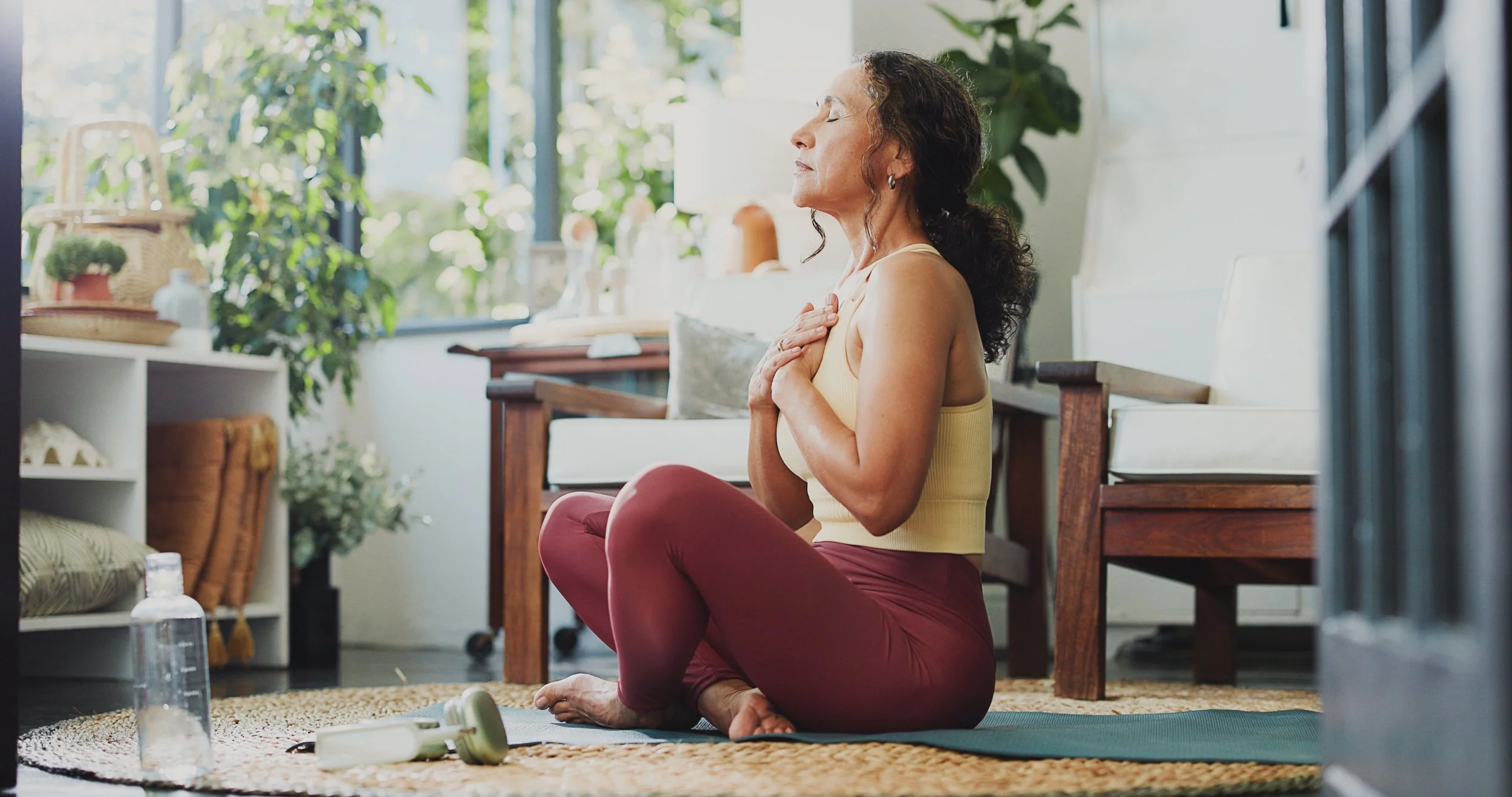
"I keep hearing about 'nervous system regulation,' and how important it is. I just don't have time to add one more thing."
Nervous system regulation has been getting a lot of attention lately, and while you may be curious about it, you might also feel like it’s the latest thing on your “I’ll deal with this later” list. And that’s totally understandable if you’re reluctant to add more to an already crowded plate. But what if you could create some powerful shifts just by tweaking what you already do.
Nervous system regulation isn't something you schedule. It's something you weave into what's already there.
If you have the time and energy to go on a silent meditation retreat, start every day with 45 minutes of yoga before sunrise, or block off a week for an all-inclusive spa retreat, please vdon't let me stop you. But if none of those things feels accessible, and you just want a few sustainable ways to actually lower your stress and get closer to baseline, keep reading.
Why Your Nervous System Needs More Than Deep Breaths
When you're living with chronic stress, the kind that’s been running in the background for years, your nervous system gets stuck in a state of low-grade alarm. Your body becomes hyper vigilant, always on the lookout for threats, even when there aren't any to be found.
When this happens your sympathetic nervous system (the fight-or-flight branch of the autonomous nervous system) has essentially become your default setting. And the parasympathetic nervous system (the rest-and-digest branch) takes a backseat.
So how do you get out of the stress response when it feels like you’re always on alert? Like so many other supportive practices in midlife, consistency is key. That’s why small moments that you can weave seamlessly into your everyday routine are key.
Turn Your Walk Into a Savoring Walk
If your walks aways include popping in your earbuds, listening to a podcast, and tuning out the outside world, you may want to change it up a bit.
Take a walk you’re already doing and turn it into a savoring walk. The pace slows just a little as you take time to notice the feeling of the sun on your face, the sound of the birds overhead, and the smell of your neighbor’s freshly cut grass. (Full disclosure: that last example would apply to my childhood growing up in Michigan. In Barcelona, it doesn’t quit fit!)
Neuroscientist Rick Hanson calls this "taking in the good" as you intentionally let positive experiences absorb into your nervous system. Most of us are very good at absorbing the negative and rushing past the positive, so a savoring walk can be a simple way to reverse that.
Try this: On your next walk, leave the earbuds out for at least the first 10 minutes. Look for one thing that's beautiful, one thing that makes you curious, and one thing that feels warm or pleasant. No need to analyze. Just notice and let yourself linger on it for a few seconds.
Watch a Show From Your Childhood
Most of us use TV to decompress at the end of the day, but there's a difference between scrolling through something new while half-checking your phone and actually settling into something that brings you comfort and ease.
This is where nostalgia becomes an unexpected ally. Research on the psychology of nostalgia shows it reliably decreases anxiety, increases feelings of social connection, and gives people a sense of continuity (i.e. the feeling that your life has coherence and meaning). For a dysregulated nervous system, all of that is gold.
A show from your childhood works because your body already knows it's safe. There's no suspense about whether it ends well. You know the characters. You know the world. That predictability is a signal to your nervous system that it can relax its watch. If you know me, you know that my go-to is The Golden Girls. I can’t watch an episode without thinking about sitting on the sofa between my grandma and my mom, listening to them both cackle away.
Try this: Pick one show you loved as a kid or teenager that genuinely made you happy, not just something you watched. Notice what happens in your body when the theme song comes on.
Turn Household Chores Into a Rhythm Practice
I always grew up with a dishwasher in the house, but I haven’t had one in any of my own apartments for nearly twenty years. In that time, I’ve come to realize that washing dishes by hand has all the ingredients for a genuinely grounding sensory experience: warm water, repetitive movement, a clear beginning and end, and a tangible result you can see in real time.
Research from Florida State University found that people who washed dishes mindfully (focusing on the smell of the soap, the temperature of the water, the feel of each dish) reported a significant decrease in nervousness and an increase in mental clarity. People who washed dishes while distracted experienced none of those benefits.
The difference wasn't the task. It was the attention.
But don’t worry if you would rather eat glass than give up your dishwasher. The positive impact applies to the whole category of repetitive household tasks: folding laundry, sweeping, stirring something on the stove, wiping down a counter. Rhythmic, repetitive movement activates the cerebellum, quiets the prefrontal cortex (the part that's always problem-solving), and encourages a gentle release of serotonin. It's the same reason rocking, humming, and walking at an easy pace have always helped humans settle.
Try this: Next time you're at the sink or folding a load of laundry, try doing it without a screen or podcast. Feel the temperature of the water, the texture of the fabric, the rhythm of the motion. When your mind wanders to the to-do list (it will), just come back to what's in your hands. Treat it like a moving meditation rather than a chore you just have to push through.
Make Your Morning Coffee a Ritual
For most people, the morning cup of coffee is functional. You need it to wake up, and sometimes you don't even taste it. You're already halfway through the mental to-do list before the mug hits the counter.
But that first cup has more going for it than caffeine.
Warmth activates the vagus nerve, a.k.a. the main highway of your parasympathetic nervous system. Holding something warm, sipping slowly, and breathing in the steam are all subtle signals to your body that it's safe to settle.
There's also something worth naming about the morning window specifically. The first thing you reach for sets the tone for your entire nervous system for the day. Most of us reach for our phones, which means the first input our bodies receive is a flood of notifications, emails, and other people's urgency. As you already know, that's not exactly a calm way to start.
The tweak here isn't dramatic. It's just slowing down enough to let the coffee do more than wake you up.
Try this: Tomorrow morning, make your coffee as usual, but sit down with it before doing anything else. Hold it with both hands. Take three slow breaths before the first sip. Notice the warmth spreading through your hands, the smell, the quiet. That's it.
Let Music Move You
I always have a song in my head or coming in through my headphones. You might listen to music while cooking, cleaning, driving, or getting ready for work. But there's a significant difference between music playing in the background and music that you actually let into your body.
Here's what the science shows: singing (even humming) directly stimulates the vagus nerve through the vibration of your vocal cords. As I mentioned above, the vagus nerve is the primary pathway of your parasympathetic nervous system, and activating it is one of the fastest ways to shift out of the stress response. You don't need to be a good singer. You just need to make sound.
Dancing works through a different but equally powerful pathway. Rhythmic movement in sync with music engages the body's natural oscillatory systems. When you move to a beat, your nervous system literally entrains to it. Upbeat music with a steady rhythm brings your body toward activation and joy; slower, flowing music brings it toward ease and calm.
Even just putting on a song that you love and letting yourself move is a legitimate regulatory tool.
One more thing worth naming: music tied to positive memories carries an extra regulatory layer. A song from a happy period of your life tells your nervous system a story about a time when things were okay, creating a state of co-regulation with your past self.
Try this: Put on one song you love. I’m talking about something with a beat that makes you want to move, and let your body take the lead. Sing along if you know the words, even under your breath. Notice what happens in your chest and your shoulders. That loosening is your nervous system responding.
Change the Last Thing You Do Before Sleep
Scrolling through social media, reading the news, or watching something with conflict or suspense (or bouncing back and forth between all three!) send activation signals to your nervous system right when it's trying to shift into rest mode.
If creating an elaborate wind-down routine in the final hour before bed feels like too much, just focus on the last 10 minutes.
A few things that genuinely work: putting on something you find soothing (music, a sleep machine with the sound of water or a thunderstorm, an audiobook in a calm voice), doing a slow body scan just by noticing one sensation at a time, or reading a few pages of a book (the kind with paper, not the one you downloaded onto your iPad).
Try this: For the next week, make a small rule for yourself: the last thing you look at before sleep is not your phone. Even 5 minutes of something gentler shifts your nervous system's closing message from "stay alert" to "it's safe to rest."
The Bigger Picture
Your nervous system doesn't heal through heroic efforts. It heals through repeated, low-stakes experiences of safety — moments where your body gets the message: we're okay right now. We can settle. We can rest.
When you build those moments into things you're already doing, you stop waiting for a free Saturday to "work on your stress." Regulation instead becomes part of how you live.
Which of these feels most doable for you right now? I'd love to hear in the comments.
